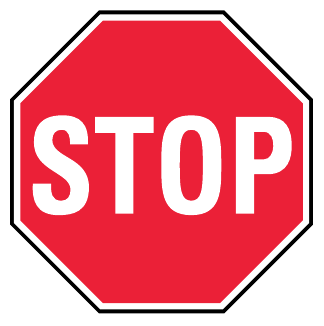
Stop
You must come to a complete stop.
What to do: Stop at the stop line; if none, before the crosswalk or intersection. Yield and proceed only when safe.
Drisavo
Learn what a sign means and what to do when you see it. These examples cover common Alberta signs, traffic signals and pavement markings. Use them alongside the full Alberta Driver’s Guide.
These signs tell you what you must or must not do. Read any additional restrictions, arrows or time plates.
You must come to a complete stop.
What to do: Stop at the stop line; if none, before the crosswalk or intersection. Yield and proceed only when safe.
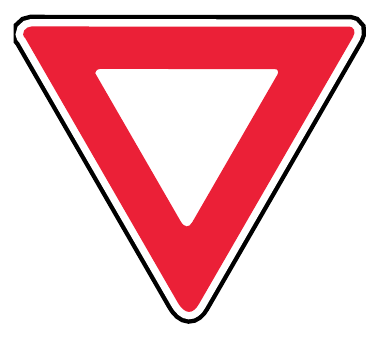
Other traffic and pedestrians may have the right-of-way.
What to do: Slow down, check carefully and give way. Stop if necessary before proceeding safely.
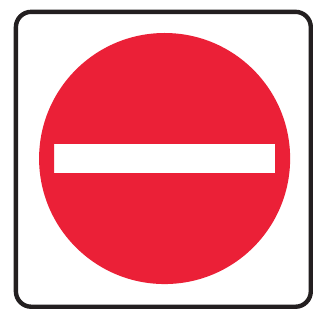
Entry from this direction is prohibited.
What to do: Do not drive past the sign into that road or entrance. Follow a permitted route.
Source: Alberta Driver’s Guide (Spring 2026), printed page 26.
Yellow warning signs help you anticipate a hazard or a change ahead. Adjust early so you can respond safely.
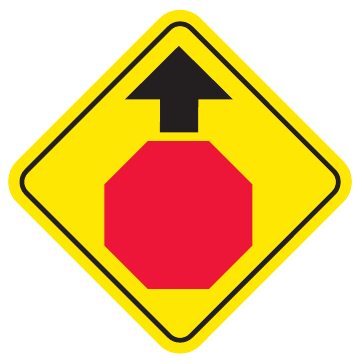
A stop sign is ahead.
What to do: Reduce speed and be ready to stop at the upcoming stop sign.
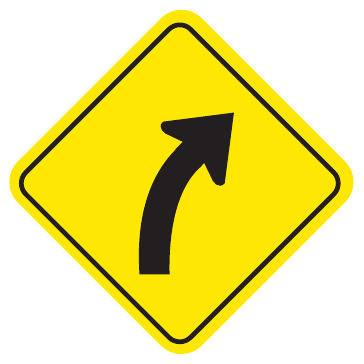
The road curves to the right ahead.
What to do: Adjust your speed before the curve and keep within your lane. Follow any advisory speed sign for the conditions.
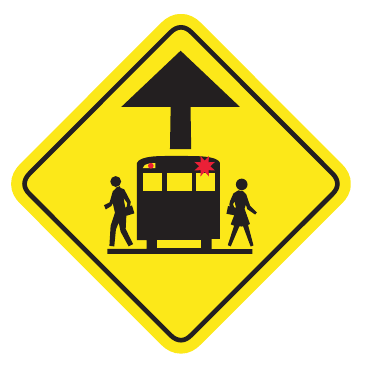
A school bus may stop ahead to load or unload children.
What to do: Watch for the bus and children. Prepare to stop, and obey the bus’s flashing-light signals.
Source: Alberta Driver’s Guide (Spring 2026), printed page 33.
Orange signs warn of road work and temporary changes. Posted construction speed limits still apply when workers are absent.
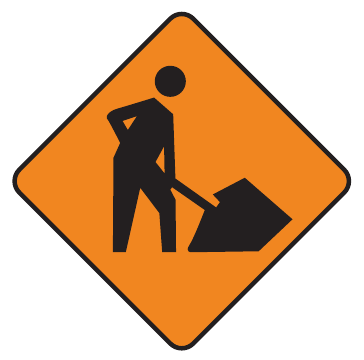
Workers may be on or near the roadway.
What to do: Slow as required by signs and conditions, watch for workers and equipment, and leave safe space.
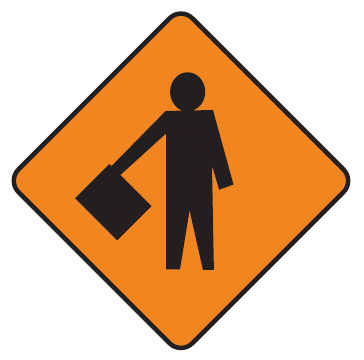
A traffic controller may be directing vehicles ahead.
What to do: Be ready to stop and follow the traffic controller’s directions.
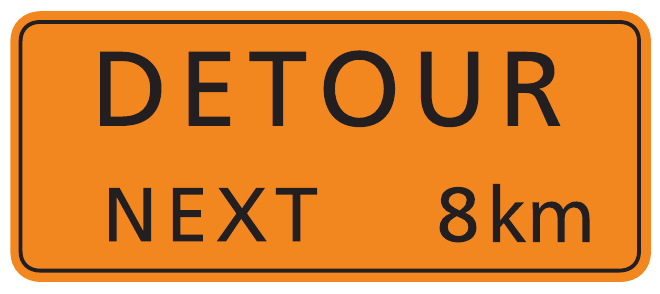
A temporary route change extends for the distance shown.
What to do: Follow the posted detour directions and watch for changes in the road surface and alignment.
Source: Alberta Driver’s Guide (Spring 2026), printed page 37.
These signs help you find destinations, routes and services. Plan your manoeuvre early and obey other traffic controls.
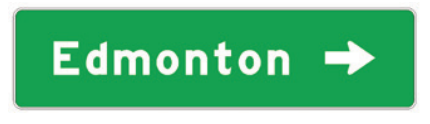
The named destination is in the direction of the arrow.
What to do: Choose the appropriate lane in advance. Make the turn only where it is permitted and safe.
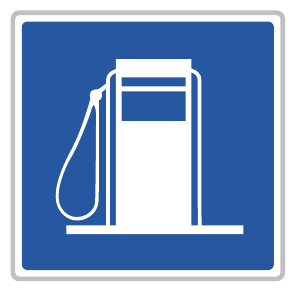
Fuel services are available along the indicated route.
What to do: Use the signed access route and signal before turning off the road.
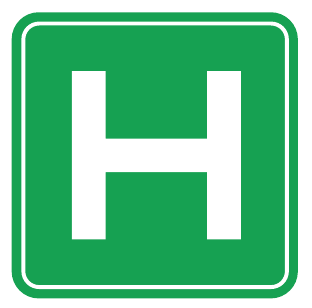
A hospital is located along the indicated route.
What to do: Follow the direction signs while continuing to obey speed limits and traffic controls.
Source: Alberta Driver’s Guide (Spring 2026), printed page 36.
Know the difference between a steady traffic light and a signal controlling an individual lane.

Stop before entering the intersection.
What to do: Stop at the line or crosswalk; if neither exists, before the intersection. A right turn, or a left turn from one one-way street to another, is allowed only after stopping and yielding when safe, unless a sign prohibits it.
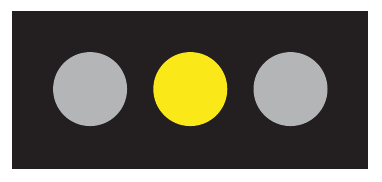
The signal is changing to red.
What to do: Stop before the line, crosswalk or intersection if you can do so safely. If already in the intersection, clear it safely.

You may proceed when the way is clear.
What to do: Yield to pedestrians when turning and to oncoming traffic when turning left. Enter only when you can clear the intersection.
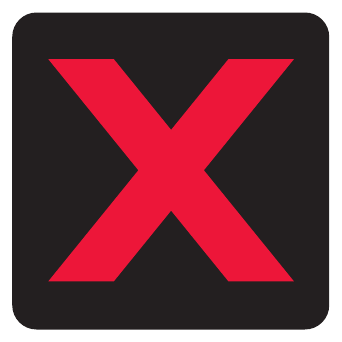
That lane is closed to traffic moving in your direction.
What to do: Do not enter or stay in that lane. Move safely into a lane showing a green arrow.
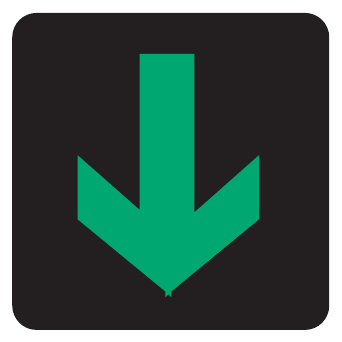
You may use the lane beneath the arrow.
What to do: Travel in that lane while watching for changes in the lane-control signals.
Source: Alberta Driver’s Guide (Spring 2026), printed pages 22–25.
Yellow lines separate opposing traffic. White lines separate traffic moving in the same direction. Check signs and traffic before any permitted manoeuvre.
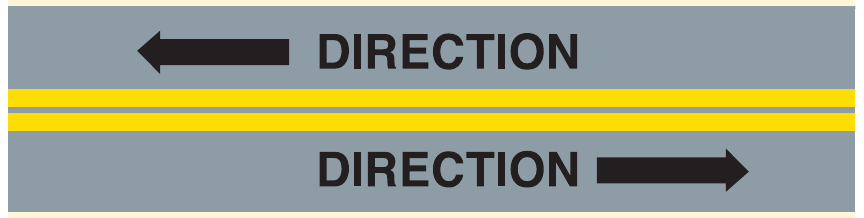
Passing across the centre lines is prohibited in both directions.
What to do: Remain on your side of the road and wait for a permitted, safe passing opportunity.
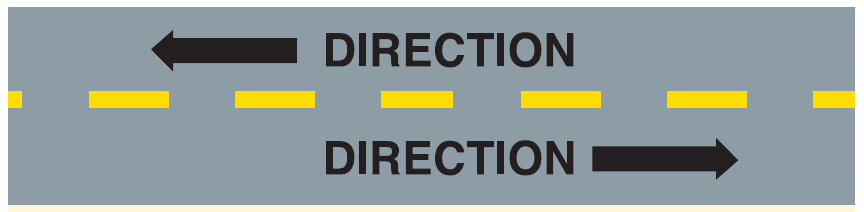
Passing may be permitted when safe.
What to do: Check that passing is legal, sightlines are clear and there is enough room to complete the pass safely.
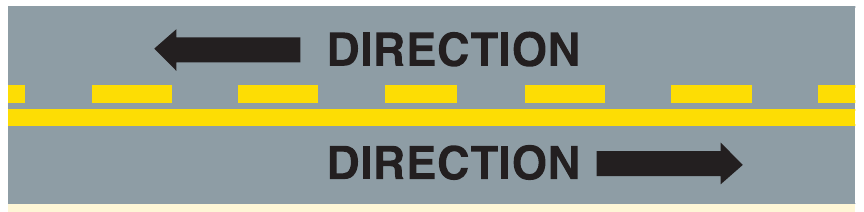
Passing is permitted only for the driver next to the broken line, when safe.
What to do: If the solid line is on your side, do not cross it to pass. If the broken line is on your side, check carefully before passing.
Source: Alberta Driver’s Guide (Spring 2026), printed page 38.
Illustrations: Government of Alberta, Driver’s Guide, Spring 2026, reproduced under the Open Government Licence – Alberta. Drisavo wrote the study summaries. Reviewed 2 October 2026. This page is a selection of examples, not the complete sign catalogue.
This independent practice tool is provided by Drisavo for educational purposes. It is not an official Government of Alberta knowledge test and does not contain or claim to reproduce official examination questions.
“I appreciate the hard work that’s going on here. I can tell the dedication for success is definitely there.”
“Highly recommend this driving school, my experience with them was amazing. My instructor was patient and professional. One of my favourite things was how efficient and easy their booking was. Drisavo driving school helped me gain confidence on the road. If you’re looking for a GREAT driving school I recommend this one.”
“Moe was amazing with our daughter !!! She has extreme anxiety , he was so calm with her and she came home happier and more confident to write her driving test then she has ever been. Thank you so much moe !”
“Highly recommend Drisavo. The booking process was simple, the vehicle was clean, and the instruction was outstanding.”
“Excellent driving school. Professional instructors, great communication, and a positive learning experience. Highly recommend Drisavo.”
“Drisavo made learning to drive simple and stress-free. Friendly instructors, great lessons, and outstanding service.”
Yes. Drisavo offers highway driving lessons to help students become comfortable with merging, lane changes, maintaining safe speeds, and driving confidently on Alberta highways.
There is no set number of lessons because every student learns at a different pace. Your instructor will assess your progress and recommend a training plan based on your experience, confidence level, and driving goals.